

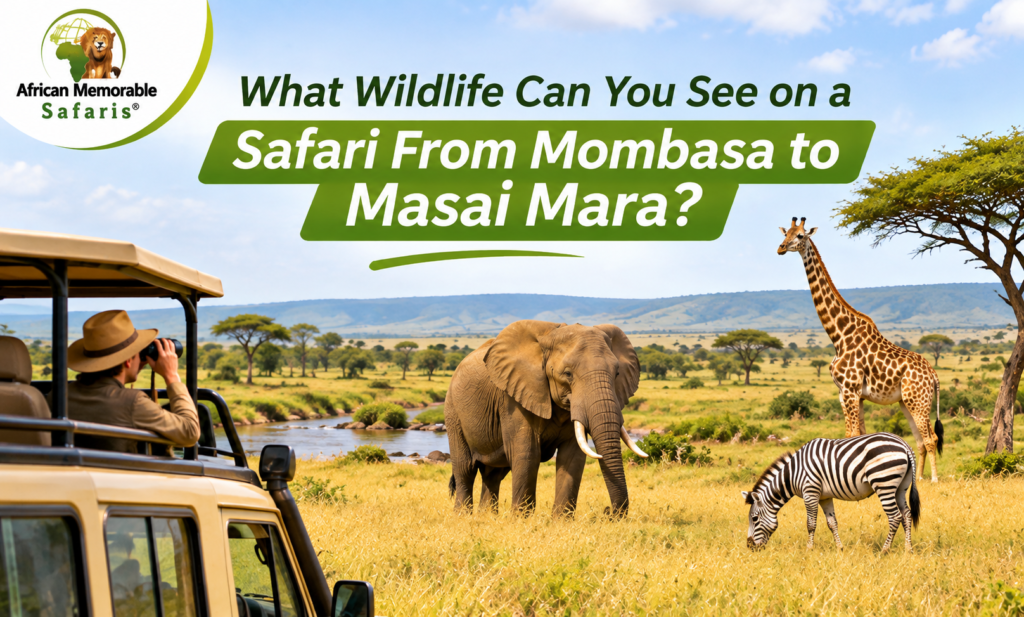
A safari from Mombasa to Masai Mara crosses several very different habitats, and each one comes with its own cast of animals. Dry bushland, swamp, a freshwater lake and open grassland all appear along the way. That variety is the real draw. This guide walks through the wildlife in each stop, explains when the Great Migration fits in, and covers how the choice between road and air changes the time you spend with the animals.
How the Route Shapes What You See
Most overland itineraries link four areas: Tsavo East and Tsavo West, Amboseli, Lake Naivasha, and the Masai Mara. Each stop sits in a different ecosystem. Tsavo is a vast, dry wilderness. Amboseli is a flat basin fed by swamps. Naivasha is a Rift Valley lake. The Mara is open savannah cut by rivers.
Wildlife follows habitat, so the species list changes from one stage to the next. A traveler who covers the full route sees far more variety than someone who flies straight to one reserve. Time matters too. Longer routes leave room for slow mornings and a second game drive in the same park, which often decides whether you catch a leopard or only hear about one.
Tsavo East and Tsavo West
Tsavo is often the first stop for travelers leaving the coast. It feels wilder and less crowded than many northern parks, with long horizons and red earth. The animals are spread across a large area, so sightings reward patience.
Wildlife commonly seen in the Tsavo parks includes:
- Elephants coated in red dust, a result of bathing in the park’s iron-rich soil
- Lions, including males that often lack the full mane seen in other regions
- Buffalo herds near waterholes and river edges
- Giraffe, zebra, impala, and the fringe-eared oryx
- Hippos and crocodiles at Mzima Springs in Tsavo West
- Black rhino in the Ngulia Rhino Sanctuary, where numbers are protected and monitored
Tsavo also carries some history. In 1898, a pair of lions became infamous for attacking workers building the Kenya-Uganda railway, and the story still shapes how many visitors think about the park’s big cats. Today the lions are watched from vehicles, and sightings tend to feel earned after long, quiet stretches of driving.
Tsavo East offers wide plains and rocky viewpoints such as Mudanda Rock, where herds gather to drink in the dry months. Tsavo West is more varied, with volcanic hills, springs, and thicker vegetation. Because the bush is denser, predators can be harder to spot here, but birdlife and water-loving species make up for it.
Amboseli National Park
Amboseli is best known for elephants, and for good reason. The park’s swamps draw large family groups, and the animals often walk close to vehicles with Mount Kilimanjaro rising behind them on clear mornings. Photographers tend to plan their whole day around that light.
Beyond elephants, Amboseli supports:
- Buffalo and hippos wallowing in the Enkongo Narok swamp
- Wildebeest, zebra, and Maasai giraffe on the open plains
- Lions and cheetahs hunting across the flat terrain
- Spotted hyenas, jackals, and occasional leopards in the acacia woodland
- Pelicans, crowned cranes, saddle-billed storks, and other waterbirds
The flat landscape makes animals easier to see than in thick bush. That helps first-time visitors who are still learning how to scan for movement.
Lake Naivasha
Naivasha breaks up the drive between Amboseli and the Mara, and it changes the pace completely. A boat ride on the lake replaces the usual game drive. Hippos surface near the shoreline, and fish eagles perch in the fringing trees.
Crescent Island offers a different experience altogether, because visitors can explore on foot with a guide. Giraffe, zebra, wildebeest, and various antelope graze there without large predators. Walking among them feels quite different from watching from a vehicle.
Bird lovers get plenty here too. The lake supports hundreds of recorded species, from pelicans and cormorants to kingfishers and herons. Even visitors who do not normally care for birds often change their minds after a morning on the water.
Masai Mara National Reserve
The Mara is the headline stop for many travelers, and its reputation rests on density. Predators and large herbivores share open grassland, so a single morning drive can include several species.
Wildlife you can expect to look for in the Mara includes:
- Lions, often in prides resting in the shade or watching herds
- Cheetahs scanning from termite mounds or low rises
- Leopards in riverine woodland and rocky outcrops, harder to find but possible
- Elephants and buffalo, both widely distributed
- Black rhino, present in small numbers and not guaranteed on any drive
- Hippos and Nile crocodiles along the Mara River
- Topi, Thomson’s gazelle, eland, hartebeest, and impala across the plains
- Spotted hyenas, jackals, and bat-eared foxes
All members of the Big Five live in the reserve, but sightings depend on luck, season, and guide skill. Rhino sightings in particular are less predictable than lion or elephant sightings, and a good operator will explain that before the trip rather than promise a full set.
The Great Migration
Few wildlife events draw as much attention as the Great Migration. Large herds of wildebeest and zebra move between Tanzania’s Serengeti and the Mara in search of fresh grass. The herds typically arrive in the Mara from around July and remain until about October, though the exact timing shifts with rainfall.
The dramatic river crossings, where animals plunge into the Mara River past waiting crocodiles, are most often reported in August and September. Crossings cannot be scheduled. Herds may gather at the bank for hours, turn back, and try again the next day. Visitors who hope to see one benefit from spending at least two full days in the reserve.
For anyone planning a safari from Mombasa to Masai Mara around the migration, booking early matters. Camps and lodges near the river fill quickly during these months, and flexibility in the itinerary helps when herds change direction.
Outside migration season, the Mara still holds resident herds and a strong predator population. Many experienced travelers prefer the quieter months for that reason.
Wildlife by Season
Timing affects what you see, but no month guarantees specific sightings. A general guide looks like this:
- January to February: Dry weather and short grass improve visibility. Predators are easier to spot, and calving season in some areas brings young animals and the hunters that follow them.
- March to May: The long rains turn the landscape green. Roads can be muddy, crowds are smaller, and birdlife is excellent. Some lodges close or cut their rates.
- June to October: Dry conditions concentrate animals around water. The migration reaches the Mara, and this stretch is the busiest period.
- November to December: Short rains bring fresh growth and migratory birds. Visitor numbers remain moderate, and photography conditions can be very good.
Tsavo and Amboseli stay productive for much of the year, though animals spread out more after heavy rain and gather more tightly around water during dry spells.
The Smaller Animals Most Visitors Overlook
Large mammals get the attention, but smaller species add a lot to a long drive. Spotting them takes a slower eye, and a good guide will point them out before you notice them yourself.
Look for these along the route:
- Dik-dik, a tiny antelope that lives in pairs in the dry bush of Tsavo
- Rock hyrax, often basking on boulders near lodges and viewpoints
- Banded and dwarf mongooses, which move in lively groups across open ground
- Agama lizards, with their bright orange and blue colors, on rocks and fence posts
- Dung beetles rolling their prized balls across the road
None of these will fill a camera roll as quickly as a lion, but they often make the best stories at dinner.
Birdlife Along the Route
Wildlife on this route is not only about mammals. Kenya’s parks hold hundreds of bird species, and the mix changes with each habitat. Dry-country birds such as hornbills and starlings appear in Tsavo. Wetland species gather in Amboseli’s swamps. Naivasha supports a large water bird population, while the Mara adds raptors, secretary birds, and the large ground-dwelling kori bustard.
A simple checklist can help you notice more:
- Look up at dead trees and termite mounds for raptors and lilac-breasted rollers
- Scan reed beds and shallow water for storks, herons, and crowned cranes
- Listen at dawn, when calls carry farthest and activity peaks
- Ask your guide to stop for smaller species, which are easy to miss at speed
Road or Air: How the Choice Affects Wildlife Time
A full overland route gives you the widest range of habitats, but it also uses many hours on the road. Long transfers reduce the time available for game drives, so itineraries need to be paced with care. Spreading the route across more days usually produces a better experience than trying to compress it.
Flying is the alternative. A charter or scheduled flight from the coast to the Mara saves a full day or more of travel, which means more game drives in the reserve. The trade-off is that you skip Tsavo, Amboseli, and Naivasha unless you add them separately.
African Memorable Safaris, based in Mtwapa near Mombasa, plans both formats. Their itineraries include road safaris through Tsavo and Amboseli, flying safaris from coastal towns to the Mara, and combinations that use the Standard Gauge Railway for part of the journey. A safari from Mombasa to Masai Mara can therefore be built around a long overland circuit, a short flying trip, or something in between, depending on how much time and budget a traveler has.
Common Wildlife Viewing Mistakes
Even well-planned trips can lose value through small errors. Watch for these:
- Rushing between parks and leaving too little time for each game drive
- Expecting to see all the Big Five in a single day, which sets up disappointment
- Skipping early morning and late afternoon drives, when animals are most active
- Ignoring the guide’s advice about where to wait or when to move on
- Packing only a phone camera when a pair of binoculars would show far more
- Leaving no flexibility in the itinerary for a sighting that deserves extra time
Patience often pays off in wildlife viewing. Some of the best moments come after the vehicle has been parked at one spot for half an hour.
FAQs
How many days do I need for a safari from Mombasa to Masai Mara? Overland itineraries commonly run six to nine days when they include Tsavo, Amboseli, Naivasha, and the Mara. A flying safari can cover the Mara in as little as three days, though it will not include the other parks.
Will I see all of the Big Five? Lion, elephant, and buffalo are the most commonly seen, with leopard and rhino being harder to find. No operator can guarantee a complete set on any trip.
When is the best time to see wildlife on this route? Dry months from June to October concentrate animals near water and bring the migration to the Mara. January and February also offer good visibility. Wet months offer fewer crowds and strong birdwatching.
Is a flying safari worth the extra cost? It depends on your priorities. Flying saves travel time and adds game drive hours in the Mara, but it removes the wildlife and scenery of the overland route.
Is the Great Migration visible all year? No. The herds are in the Mara roughly between July and October. At other times they are in the Serengeti and surrounding areas in Tanzania.
Plan Your Own Safari With Us
A safari from Mombasa to Masai Mara rewards travelers who match the route to their interests and give each park enough time. Whether you want Tsavo’s red elephants, Amboseli’s Kilimanjaro backdrop, Naivasha’s boat rides, or the Mara’s big cats and herds, the right pacing makes the difference. Our team at African Memorable Safaris builds private road and air itineraries from the Kenyan coast and tailors each one to your dates, budget, and wildlife priorities. Contact African Memorable Safaris today and tell us what you hope to see.