

What It Means for Your Mombasa and Maasai Mara Trip?
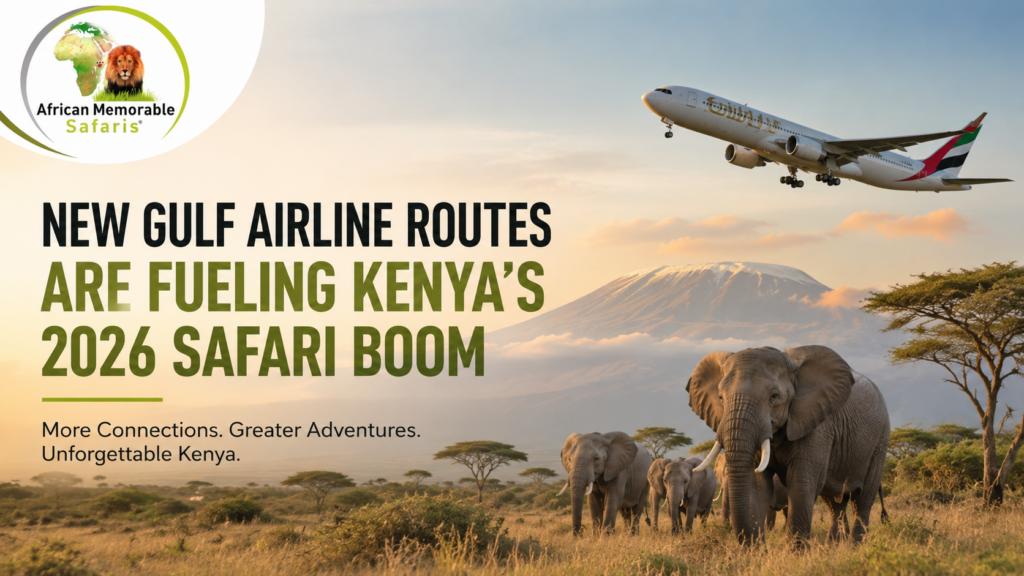
Getting to Kenya just got a lot easier. Over the past year, major Gulf-based airlines have been steadily adding new direct routes, extra weekly frequencies, and upgraded terminal operations connecting the Middle East to East Africa. Kenya is one of the biggest winners of this shift, joining South Africa, Tanzania, Mauritius, Seychelles, and Rwanda as a priority destination for expanding Gulf carriers, all part of what industry analysts are calling a broader 2026 African safari tourism boom.
For anyone planning a Kenya safari, Mombasa beach stay, or a combined coastal-and-bush itinerary, this wave of new connectivity is worth paying attention to. Here’s what’s changing, and what it means for planning your trip.
Why Gulf Airlines Are Investing Heavily in Kenya Right Now
Gulf hub airports have spent the past decade positioning themselves as the connecting point between Europe, Asia, and Africa, and East Africa has become one of the fastest-growing parts of that network. Kenya sits at the center of this strategy for a simple reason: Nairobi’s Jomo Kenyatta International Airport is the busiest aviation hub in East Africa, and it feeds directly into the region’s biggest safari destinations, including the Maasai Mara.
As demand for luxury and long-haul wildlife travel grows among Gulf-based and international travelers, airlines are responding with more seats, more frequencies, and increasingly more routes into Kenya’s secondary cities, not just its capital.
Kenya safari is easier with a fly-in experience. Request your air safari quote today.
More Seats, More Frequencies: What’s Changing on the Ground
Several concrete changes are rolling out through 2026:
- Additional daily long-haul services between major Gulf hubs and Nairobi are being added, increasing total weekly capacity into the country significantly.
- New codeshare and partnership agreements between Gulf carriers and Kenya’s national airline are expanding the number of connection options for travelers arriving from the Middle East, Europe, and Asia.
- Improved airport operations in Nairobi, including terminal upgrades, are aimed at smoothing the arrivals process during the busiest safari travel months.
- New frequencies into Mombasa are also being introduced, a notable shift, since most Gulf routes into Kenya have historically funneled almost exclusively through Nairobi.
That last point matters a lot for anyone considering a Mombasa safari in Kenya, since it signals growing recognition that Mombasa isn’t just a beach add-on, it’s becoming a legitimate second gateway into the country.
Mombasa’s Direct Air Links Are Growing Too
Historically, most international travelers flying into Kenya landed in Nairobi and treated Mombasa as a domestic add-on reached by a short connecting flight. That pattern is starting to shift. New Mombasa air connections from Gulf hubs mean travelers can increasingly fly directly into Kenya’s coast rather than routing everything through the capital first.
This is good news for a few types of travelers in particular:
- Those wanting a Mombasa air safari experience that starts on the coast and moves inland to the bush, without unnecessary backtracking through Nairobi
- Beach-first travelers who want easy access to a Kenya Mombasa safari extension without a complicated multi-leg journey
- Travelers combining Kenya with wider East African itineraries, since improved Mombasa air links make it easier to fly in on one coast and depart from an inland hub, or vice versa
What This Means for a Mombasa Safari Kenya Getaway
If you’ve been considering an African safari mombasa trip pairing time on Kenya’s Indian Ocean coastline with a classic bush safari, better air access removes one of the biggest historical friction points. A typical Mombasa safari, Kenya itinerary usually looks something like this:
- Arrive in Mombasa and spend several days on the coast, exploring the Old Town, coral reefs, and beach resorts along the Diani or North Coast
- Transfer inland, either by a short domestic flight or road connection, to one of Kenya’s premier safari destinations
- Spend several days on safari, most commonly in the Maasai Mara, before flying home from either Mombasa or Nairobi
With more direct international capacity flowing into both Mombasa and Nairobi, this two-center style of trip safari, Mombasa, Kenya, in essence, is becoming significantly easier to plan and book, especially for travelers coming from the Gulf, Europe, or Asia who previously faced longer, more complicated routings.
Combining Mombasa and Masai Mara: The Ultimate Kenya Itinerary
A masai mara safari remains one of the most popular ways to experience Kenya, because it delivers two completely different landscapes in a single trip: white-sand coastline and turquoise water on one end, and the open grasslands of the Mara home to the Great Migration during peak season on the other.
With improved Mombasa air safari connectivity, this combination is becoming more accessible for travelers who previously had to budget extra time and cost for awkward connections. A typical Kenya safari Mombasa itinerary might run 7–10 days: enough time for a proper beach stay plus three or four nights in the Mara, without feeling rushed on either end.
Why Kenya Is at the Center of the Wider African Safari Boom
Kenya’s aviation growth isn’t happening in isolation. It’s part of a broader pattern across the continent, where Gulf carriers are simultaneously expanding capacity into South Africa, Tanzania, Mauritius, Seychelles, and Rwanda. Together, these moves reflect growing demand from long-haul travelers, particularly from the Middle East and Asia, for premium wildlife and beach experiences across East and Southern Africa.
For Kenya specifically, this expanded connectivity arrives at a good moment: it coincides with the Great Migration season in the Maasai Mara, giving the country’s two biggest tourism draws, its beaches and its safaris, a simultaneous boost in accessibility right when demand is highest.
Planning Your Mombasa Air Safari in 2026
A few practical takeaways if you’re planning a trip around this improved connectivity:
- Compare routings into both Nairobi and Mombasa. With more direct capacity now reaching the coast, it may no longer make sense to automatically route everything through the capital.
- Book combined itineraries early. As awareness of easier Mombasa-to-Mara routings grows, availability for the best coastal resorts and Mara camps during peak season will tighten.
- Factor in domestic connections. Even with better international access, most Mombasa-to-Mara itineraries still involve a short domestic flight or transfer built into your overall trip timing.
- Align your trip with peak wildlife season if a safari is the priority, since the added air capacity is landing at the same time as the Maasai Mara’s busiest and most rewarding months.
Quick Facts
- Kenya is one of six African countries, alongside South Africa, Tanzania, Mauritius, Seychelles, and Rwanda, seeing major new Gulf airline investment in 2026.
- Nairobi’s Jomo Kenyatta International Airport remains East Africa’s busiest hub and the primary gateway for most Gulf routes.
- New frequencies are increasingly reaching Mombasa directly, not just Nairobi, opening up easier coastal-to-safari itineraries.
- The expansion is being driven by rising long-haul demand for combined beach-and-safari travel across East Africa.
- The added capacity is arriving alongside peak Great Migration season, making 2026 a particularly strong year to combine a Mombasa beach stay with a Maasai Mara safari.
Final Thoughts
Better air access into Kenya and into Mombasa specifically is removing one of the last real barriers to combining the country’s two signature experiences in a single trip. Whether you’re drawn by the idea of a classic Mombasa Masai Mara safari or simply want the most efficient way to reach the Mara from abroad, 2026’s wave of new Gulf routes makes now one of the best times in years to plan that trip.
FAQ
1. Why are new Gulf airline routes boosting Kenya’s safari tourism in 2026?
Expanded flight networks and increased frequencies from Gulf carriers are making Kenya more accessible for travelers from the Middle East, Europe, and Asia via major hub airports. Improved connectivity shortens travel times, offers more scheduling options, and supports rising demand for safari holidays.
2. Which Kenyan safari destinations are expected to benefit the most?
Popular wildlife destinations such as the Maasai Mara, Amboseli, Samburu, Tsavo, and Laikipia are expected to see increased visitor numbers. Domestic airlines are also adding capacity to meet growing demand for flights from Nairobi to key safari regions.
3. What should travelers know before booking a Kenya safari in 2026?
Booking flights, safari lodges, and park accommodations well in advance is recommended, especially during the Great Migration season (July–October). Travelers should also check visa requirements, vaccination guidance, and baggage allowances for connecting Gulf airlines before departure.